Casa, apartamento ou terreno? Como escolher no sul da Bahia
Atualizado: 26 de ago.
Comprar um imóvel no sul da Bahia é um sonho para muitas pessoas. Seja para morar, passar férias ou investir, uma das primeiras decisões é escolher qual tipo de imóvel faz mais sentido para você: uma casa, um apartamento ou um terreno?
Não existe uma resposta única. A melhor opção depende do seu orçamento, dos seus objetivos, do tempo que pretende passar na região e do tipo de investimento que deseja fazer.
Neste artigo, vamos comparar as principais características de cada opção para ajudar você a tomar uma decisão mais consciente.
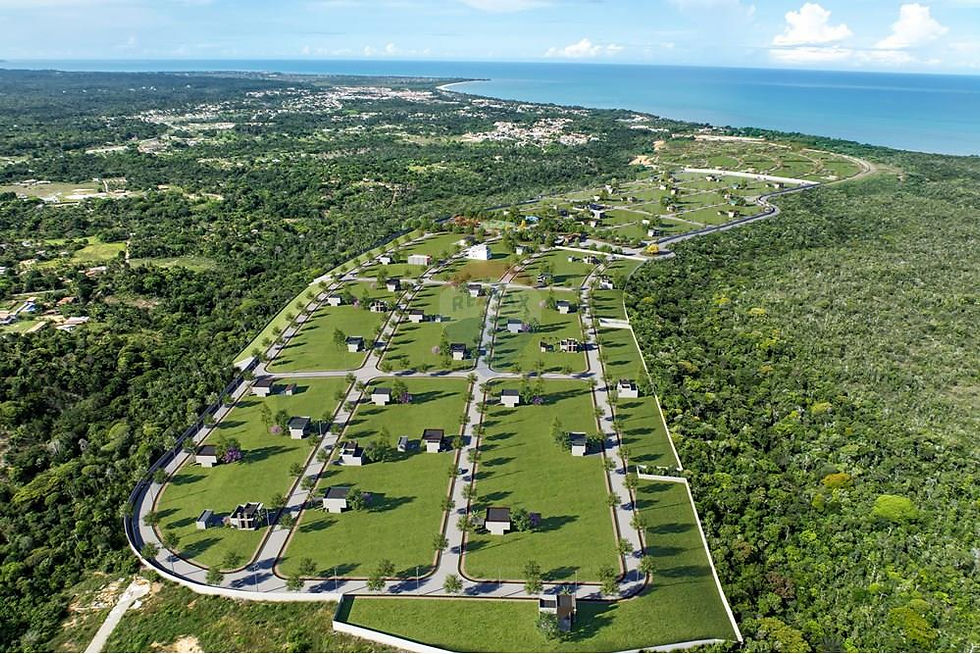
Casa: mais espaço e privacidade
A casa é uma escolha muito procurada por famílias e por pessoas que desejam ter mais espaço e liberdade.
No sul da Bahia, é possível encontrar casas em bairros residenciais, condomínios fechados e regiões próximas às praias.
Vantagens de comprar uma casa
Mais espaço interno e externo;
Maior privacidade;
Possibilidade de ter piscina e jardim;
Mais liberdade para fazer alterações e reformas;
Boa opção para famílias;
Pode ser interessante para aluguel por temporada.
Uma casa também pode ser uma excelente escolha para quem pretende morar permanentemente na região e deseja ter espaço para receber familiares e amigos.
O que considerar
Por outro lado, uma casa normalmente exige mais manutenção do que um apartamento.
Você pode ter despesas com jardim, piscina, pintura, telhado, muros, portões e outras áreas externas.
Além disso, se a casa estiver em um condomínio, será necessário considerar também a taxa de condomínio e as regras estabelecidas pela associação ou administração.
Apartamento: praticidade e segurança
Para quem procura praticidade, um apartamento pode ser uma excelente alternativa.
Em destinos turísticos do sul da Bahia, existem apartamentos em diferentes localizações e faixas de preço, desde imóveis compactos até unidades maiores e de alto padrão.
Vantagens de comprar um apartamento
Menor área para manutenção;
Maior praticidade;
Áreas comuns que podem incluir piscina, jardim e espaço de lazer;
Segurança, dependendo do condomínio;
Pode ser uma boa opção para quem passa apenas parte do ano na região;
Potencial para aluguel por temporada, dependendo da localização e das regras do condomínio.
Para alguém que mora fora da Bahia ou até mesmo fora do Brasil, um apartamento pode ser particularmente interessante porque pode exigir menos manutenção quando o proprietário não está presente.
O que considerar
O principal ponto a analisar é o condomínio.
Antes de comprar, verifique o valor da taxa mensal e o que ela inclui.
Também é importante entender as regras do condomínio relacionadas a reformas, animais, aluguel por temporada, utilização das áreas comuns e outras questões.
Um condomínio barato nem sempre significa que o imóvel terá menores custos no futuro. Procure saber se existem obras previstas ou despesas extraordinárias.
Terreno: liberdade para construir
Comprar um terreno é uma opção completamente diferente.
Em vez de comprar uma casa ou apartamento já pronto, você adquire o espaço onde poderá construir de acordo com suas necessidades e preferências.
Essa alternativa pode ser interessante para quem não tem pressa para mudar e deseja criar um imóvel personalizado.
Vantagens de comprar um terreno
Liberdade para desenvolver seu próprio projeto;
Possibilidade de escolher o tamanho e a distribuição dos ambientes;
Pode permitir a construção de uma casa totalmente personalizada;
Você pode planejar piscina, área gourmet, jardim e outros espaços desde o início;
Pode ser uma alternativa interessante para investimento de longo prazo.
Em algumas regiões em desenvolvimento, o terreno também pode apresentar potencial de valorização à medida que a infraestrutura local evolui.
O que considerar
Comprar um terreno significa que o investimento não termina na aquisição.
É necessário considerar os custos do projeto, aprovação, construção, mão de obra, materiais, ligações de água e energia e outros gastos.
Antes de comprar, também é fundamental verificar as regras de construção aplicáveis ao terreno.
Qual opção é melhor para morar?
Se o seu objetivo principal é morar no sul da Bahia, a escolha dependerá principalmente do seu estilo de vida.
Uma casa pode ser mais adequada para famílias que valorizam espaço e privacidade.
Um apartamento pode ser melhor para quem procura praticidade, segurança e menos manutenção.
Um terreno pode ser ideal para quem deseja construir a casa dos seus sonhos e pode esperar até que a construção seja concluída.
Também é importante pensar no seu dia a dia.
Você pretende morar perto da praia? Precisa estar próximo de escolas, supermercados e serviços? Trabalha de casa? Tem filhos? Gosta de receber amigos?
Essas perguntas podem ajudar a determinar qual tipo de imóvel combina melhor com você.
Qual é melhor para uma casa de férias?
Para quem pretende utilizar o imóvel principalmente durante as férias, um apartamento pode oferecer uma grande vantagem: praticidade.
Você pode passar algumas semanas ou meses no imóvel e, durante o restante do ano, ter menos preocupações com manutenção.
Por outro lado, uma casa pode proporcionar uma experiência muito mais espaçosa e privativa, especialmente para famílias maiores.
Uma casa com piscina, área externa e espaço para receber convidados pode ser uma excelente opção para quem pretende passar bastante tempo na Bahia.
E para investimento?
Quando o objetivo é investir, é importante analisar o imóvel como um negócio.
Não existe uma regra dizendo que casa, apartamento ou terreno será sempre o melhor investimento.
Tudo depende de fatores como:
Preço de compra;
Localização;
Demanda na região;
Potencial de valorização;
Custos de manutenção;
Possibilidade de aluguel;
Facilidade de revenda;
Infraestrutura local.
Um apartamento bem localizado pode gerar renda com aluguel por temporada.
Uma casa pode oferecer maior potencial de aluguel para famílias ou grupos.
Um terreno pode ser interessante para quem procura valorização de longo prazo.
O importante é analisar os números antes de tomar a decisão.
Pense na localização antes do tipo de imóvel
No sul da Bahia, a localização pode ser tão importante quanto o próprio imóvel.
Uma casa excelente em uma localização que não atende às suas necessidades pode ser uma escolha pior do que um apartamento mais simples em uma região muito bem localizada.
Antes de decidir, compare diferentes áreas de Porto Seguro, Arraial d'Ajuda, Trancoso, Santa Cruz Cabrália e Santo André.
Observe a distância da praia, acesso, infraestrutura, comércio, serviços, segurança e características da vizinhança.
Também considere se você está procurando uma região mais movimentada e turística ou um local mais tranquilo e residencial.
Faça as contas antes de comprar
Um dos erros mais comuns é comparar apenas o preço de compra.
Na realidade, o custo total de cada opção pode ser bastante diferente.
Casa
Além do valor de compra, considere manutenção, piscina, jardim, reformas, IPTU e possíveis custos de condomínio.
Apartamento
Considere principalmente condomínio, IPTU, manutenção interna e eventuais despesas extraordinárias do condomínio.
Terreno
Além da compra, considere projeto, documentação, preparação do terreno e o custo futuro da construção.
Fazer essa conta antecipadamente pode evitar surpresas e ajudar você a escolher uma propriedade compatível com o seu orçamento.
Então, qual escolher?
A resposta depende do que você procura.
Escolha uma casa se:Você quer espaço, privacidade e liberdade para aproveitar áreas externas.
Considere um apartamento se:Você procura praticidade, segurança e menos preocupação com manutenção.
Considere um terreno se:Você tem um projeto específico em mente e deseja construir uma propriedade personalizada.
O mais importante é definir primeiro o objetivo da compra e só depois escolher o tipo de imóvel.
Encontre o imóvel certo no sul da Bahia
Comprar uma propriedade no sul da Bahia é uma decisão importante, e conhecer as opções disponíveis pode fazer toda a diferença.
Na Schaper Bahia, ajudamos compradores a encontrar imóveis de acordo com seus objetivos, orçamento e estilo de vida em algumas das regiões mais procuradas do sul da Bahia.
Se você está procurando uma casa, apartamento ou terreno em Porto Seguro, Arraial d'Ajuda, Trancoso, Santa Cruz Cabrália ou Santo André, entre em contato conosco para conhecer as oportunidades disponíveis.


Comentários